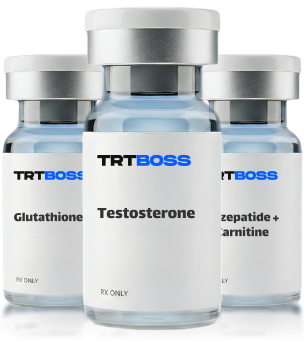
Status: Prescription [RX] Only Care– Telehealth Evaluation Required
Clinician-Guided. Structured. Designed for Continuity of Care.
A structured telehealth care experience centered on licensed clinician oversight, individualized evaluation, and ongoing monitoring. Care is designed to support safe, compliant hormone management through evidence-informed clinical decision-making. Care plans are developed only after review of medical history, symptoms, and laboratory data, and are adjusted over time based on clinician judgment and follow-up evaluation
What You Can Expect
Clinician-Led Evaluation
Your care begins with a comprehensive telehealth consultation conducted by a licensed clinician. Medical history, symptom presentation, and available laboratory data are reviewed to determine whether treatment may be clinically appropriate.
Structured, Data-Informed Monitoring
Laboratory testing and follow-up schedules are ordered at the discretion of the clinician and used to guide ongoing care decisions. Monitoring supports safe use and longitudinal oversight throughout treatment.
Personalized Care Planning
When treatment is prescribed, clinicians develop an individualized plan aligned with your clinical profile. Adjustments may be made over time based on follow-up evaluations, laboratory review, and patient-reported information.
Prescription-Only Medications
All medications are dispensed pursuant to a valid prescription and fulfilled by licensed U.S. pharmacies. TRTBOSS does not offer research-use, non-prescription, or over-the-counter hormone products.
Ongoing Access & Follow-Up
Patients maintain ongoing access to their care team through secure patient messaging. Follow-up consultations and care adjustments are provided as clinically appropriate.
What’s Included in Your Care ( all inclusive plans )
When clinically appropriate, services may include:
Telehealth clinician consultations
Initial blood panel with clinician review
3-month follow-up blood panel with clinician review
Routine monitoring blood panels every 6 months with clinician review
Ongoing clinician messaging through the secure patient portal
Prescription medications and required injection supplies
Discreet, unbranded shipping directly to your door
Medication & Sourcing Standards
Carrier Oil Options
Prescription testosterone utilizes pharmaceutical-grade carrier oils
USP Cottonseed Oil – the traditional pharmaceutical standard
All formulations are sterile and dispensed pursuant to a valid prescription.
Telehealth Convenience & Privacy
100% digital intake and consultation
No waiting rooms or in-person visits
Discreet, unbranded packaging to protect privacy
Important Care Disclosure
TRTBOSS provides telehealth services and does not guarantee specific outcomes. All treatment decisions are made by licensed clinicians based on individual evaluation. Care options are not appropriate for everyone. Fees reflect clinical services, care coordination, and pharmacy fulfillment associated with prescribed therapy and do not guarantee treatment eligibility or prescription issuance.
*All-inclusive services apply to active monthly billing plans. Patients may be responsible for additional laboratory costs if repeat testing is required due to incomplete or invalid samples.
Testosterone therapy may be considered for adult men with clinically confirmed testosterone deficiency (hypogonadism), as determined by a licensed clinician following medical evaluation and laboratory review. TRT is not appropriate for everyone, and individual results vary.
Some men with low testosterone may report symptoms such as:
Persistent low energy or fatigue
Reduced libido
Difficulty maintaining muscle mass
Changes in motivation or overall well-being
Administration (Clinician-Directed)
Route: Injection (route and technique determined by the prescribing clinician).
Frequency: As prescribed based on individual evaluation and clinical considerations.
Training & Instructions: Patients receive administration guidance and supplies as applicable. Do not change dose or schedule without clinician approval.
Active Ingredient:
Testosterone Cypionate USP (200 mg/mL) — Schedule III controlled substance.
Carrier: Cottonseed Oil USP: A commonly used pharmaceutical carrier.
Care options aligned to your goals, based on individualized clinical review
Start with an online intake. Clinicians may order and review lab work when clinically appropriate.
Follow-ups and adjustments are guided by a licensed clinician based on symptoms, history, and lab results.
Clinician-guided discussion of options for men’s health concerns, based on your evaluation and medical history.
Reminders, education, and help navigating next steps—so you know what happens before and after your visit.
Confidential support with secure messaging and account access.
Testosterone Replacement Therapy (TRT) is a prescription treatment that may be considered for men with clinically confirmed testosterone deficiency, following evaluation by a licensed clinician. Testosterone plays a role in multiple physiologic systems, and when levels fall below the normal range, some individuals may experience symptoms that affect overall well-being.
Under clinician supervision, TRT is prescribed based on individual medical history and laboratory evaluation when indicated. Treatment decisions are tailored to the patient and monitored over time to support safe, medically appropriate care.
Compared to non-prescription approaches, TRT represents a clinician-directed medical option for men with confirmed deficiency. Care plans emphasize ongoing monitoring, individualized dosing, and clinical oversight as part of a structured treatment approach.
Get Started TodayAt TRTBOSS Every step is supported through a clinician-led process with independent, U.S. Licensed clinicians. If prescribed, medications are dispensed and shipped by Licensed U.S LegitScript-certified pharmacies. From expert medical oversight to discreet delivery, We prioritize privacy, secure communications, and clear next steps throughout your experience.
TRTBOSS has truly changed my life. The process was smooth, the team was supportive, and the results speak for themselves. I feel more energetic, confident, and focused than ever. It’s easily the best decision I’ve made for my health.
TRT stands for Testosterone Replacement Therapy. Doctors first used Injectable Testosterone for medical treatment of low testosterone (hypogonadism) in the 1940’s. TRT involves the use of injections, oral capsules or gels to optimize testosterone levels.
Yes. All our TRT is physician-guided and filled through licensed U.S. pharmacies with ongoing support.
Benefits can include improved energy, mood, libido, bone density and quality of life. Individual results may vary.
Common symptoms include low energy, lethargy, depression, declining libido, or weaker erections, loss of strength or muscle mass, increase fat gain, irritability or mood flatness, mental fog or poor focus, reduced drive and ambition. A simple blood test can determine if your testosterone levels are low. Begin by filling out our questionnaire and tell us about the symptoms you are experiencing. Once completed our providers will explain your results and recommend the next steps.
All medications carry risks. However, when administered under doctor supervision with regular blood monitoring, Injectable Testosterone is considered a safe and effective treatment for hypogonadism. We monitor you closely to manage any potential side effects.
Initial baseline labs → 3 month labs →6 month labs → typically every 6 months thereafter and clinically indicated.
Testosterone can suppress fertility, TRTBOSS offers optional HCG support for men who want to maintain testicular function.
Yes. TRTBOSS accepts HSA and FSA Accounts. Use your HSA/FSA card just like you would use any other credit or debit card when providing your billing information. HSA/FSA plans vary, if you are uncertain, check with your plan administrator.
Yes. Comprehensive monitoring is a safety requirement for TRT. To ensure you never skip a test due to cost, we include the cost of lab requisitions (Initial, 3-month, 6-month, and ongoing) in your monthly membership. You are only responsible for the cost of labs in the case where your covered lab work fails.
No. TRTBOSS is a telemedicine platform. You will consult with a licensed medical provider who will review your labs and medical history. Prescriptions are written only if the provider deems it medically necessary and safe for you.
All medications carry risks. However, when administered under doctor supervision with regular blood monitoring (hematocrit, PSA, estrogen), TRT is considered a safe and effective treatment for hypogonadism. We monitor you closely to manage any potential side effects.
The recent TRAVERSE trial (NEJM, 2023) confirmed that testosterone replacement therapy in hypogonadal men did not increase the risk of major adverse cardiac events compared to placebo.
We adhere strictly to state pharmacy board regulations. In some states, Cottonseed Oil is the required standard for sterile compounding of Testosterone Cypionate. In other states, MCT Oil is permitted. Both are pharmaceutical-grade, sterile, and effectively deliver the medication. Your product will be matched to the regulations of your home state.
Most men are shocked at how easy it is. We provide high-quality, thin-gauge needles that minimize sensation. Whether using Cottonseed or MCT, the “pinch” is often described as less than a mosquito bite.
Testosterone therapy may carry risks and potential side effects. Patients are monitored through ongoing clinical evaluation and laboratory testing as determined by the supervising clinician.
Medical Citations & Safety Data
We operate on evidence, not bro-science. The following clinical data supports the treatment of Hypogonadism.
Clinical studies in men with clinically confirmed hypogonadism have reported changes in body composition, including increases in fat-free mass and reductions in fat mass, when testosterone therapy is prescribed and monitored by a licensed clinician. Individual results vary and therapy is prescribed only when clinically appropriate
https://pubmed.ncbi.nlm.nih.gov/9024227/
https://bmcmedicine.biomedcentral.com/articles/10.1186/s12916-016-0700-9
https://www.nature.com/articles/ijo2015139
In men with clinically confirmed testosterone deficiency, clinical trials have reported improvements in certain measures of sexual function in some patients receiving testosterone therapy under medical supervision. Response varies by individual and treatment is provided only when clinically appropriate.
https://academic.oup.com/jcem/article/103/5/1745/4939466?login=false
Some studies have explored cognition-related outcomes in men with testosterone deficiency receiving testosterone therapy. TRT is prescribed only to treat clinically confirmed testosterone deficiency based on clinician judgment
https://onlinelibrary.wiley.com/doi/10.1111/and.12633
https://academic.oup.com/ejendo/article-abstract/155/6/773/6695703?redirectedFrom=fulltext
Certain esterified testosterone formulations have pharmacokinetic profiles that may support less frequent dosing for some patients; dosing and route are determined by the prescribing clinician based on individual evaluation and clinical considerations
https://academic.oup.com/jcem/article/107/3/614/6410585?login=false
https://ascpt.onlinelibrary.wiley.com/doi/10.1002/psp4.12287
https://pmc.ncbi.nlm.nih.gov/articles/PMC8451678/
Cardiovascular Safety (TRAVERSE Trial)
In TRAVERSE, testosterone therapy in middle-aged and older men with clinically confirmed hypogonadism and cardiovascular risk factors was non-inferior to placebo for major adverse cardiac events when patients were appropriately monitored.
Citation: Lincoff, A. M., et al. (2023). “Cardiovascular Safety of Testosterone-Replacement Therapy.” NEJM.
Body Composition & Muscle Mass
Context: Some controlled studies in non-deficient men used supraphysiologic testosterone doses and observed increases in muscle size and strength; these findings are not representative of routine TRT dosing for clinically confirmed hypogonadism
Citation: Bhasin, S., et al. (1996). “The Effects of Supraphysiologic Doses of Testosterone on Muscle Size and Strength in Normal Men.” NEJM.
Mood & Quality of Life
Context: In men with clinically confirmed testosterone deficiency, clinical trials of FDA-approved testosterone products have reported improvements in certain patient-reported outcomes (e.g., sexual function and mood-related measures) in some patients under medical supervision
Citation: Wang, C., et al. (2000). “Transdermal Testosterone Gel Improves Sexual Function, Mood, Muscle Strength, and Body Composition Parameters in Hypogonadal Men.” J Clin Endocrinol Metab.
Cognitive Function
Summary: Some studies have explored cognitive outcomes in older men receiving testosterone therapy; results are variable and cognition is not an indication for treatment. TRT is prescribed only for clinically confirmed testosterone deficiency
Citation: Resnick, S. M., et al. (2017). “Testosterone Treatment and Cognitive Function.” JAMA.
IMPORTANT SAFETY INFORMATION
TRTBOSS facilitates access to telehealth services and connects patients with independent, licensed U.S. healthcare providers. Testosterone replacement therapy (TRT) is a prescription-only medical treatment and is provided only when a licensed clinician determines it is clinically appropriate based on medical history, symptoms, and laboratory evaluation.
Indication & Use- Testosterone therapy is indicated for men with clinically confirmed testosterone deficiency.
Medical Evaluation & Monitoring- Treatment decisions are made solely by the supervising clinician. Patients receiving testosterone therapy may require ongoing clinical evaluation and laboratory monitoring, including assessment of testosterone levels other markers as determined by the clinician.
Schedule III Controlled Substance- Testosterone is classified as a Schedule III controlled substance under U.S. federal law. Misuse or abuse may result in serious adverse effects, including cardiovascular events, psychiatric effects, and dependency.
Cardiovascular & Blood Pressure Risk- Testosterone therapy can increase blood pressure, which may raise the risk of cardiovascular events over time. Blood pressure should be monitored periodically during treatment as determined by the prescribing clinician.
Large clinical trials in appropriately selected men with hypogonadism have shown no increase in major adverse cardiovascular events compared to placebo when therapy is properly monitored; however, individual risk varies and therapy is not appropriate for all patients.
Potential Side Effects- Possible side effects of testosterone therapy may include, but are not limited to: Acne or oily skin, Injection-site discomfort or irritation, Increased hematocrit (thickening of the blood), Fluid retention, Changes in mood or energy, Hair loss in genetically predisposed individuals.
Patients should promptly report any concerning symptoms to their healthcare provider.
Fertility Considerations- Testosterone therapy may suppress endogenous testosterone production and sperm production, which can impact fertility. Men who are actively trying to conceive should discuss alternative treatment options with their clinician.
Prostate Health- Testosterone therapy is not recommended for men with known or suspected prostate cancer. Prostate health may be monitored during therapy as determined by the supervising clinician.
Not a Supplement- Testosterone therapy is not a dietary supplement and should not be used casually. It is a serious medical treatment intended only for individuals with a legitimate clinical indication under professional medical supervision.
Individual Results Vary- Responses to testosterone therapy vary. Benefits described in clinical literature are not guaranteed, and individual outcomes depend on medical history, baseline hormone levels, adherence to monitoring, and clinician judgment.
Personalized telehealth treatments tailored for you.